Archive | 2011

April Panchanga

31 Mar

April 2011 – Monthly Panchanga    Vikruthi / Khara Samvatsara

Uttarayana Vasantha Ritu –Phalguna / Chaitra Masa

Important events for the month of April is appended below for information and guidance

03 Apr 2011

  • New Moon

04 Apr 2011

  • Chandramana Ugadi

12 Apr 2011

  • Sri Rama Navami

14 Apr 2011

  • Sun enters Aries. Sun is good in 3,6,10 & 11 from natal Moon.
  • Shukra Jayanthi

15 Apr 2011

  • Maha Pradhosha

16 Apr 2011

  • Mahaveer Jayanthi
  • Venus enters Pisces. Venus is good in all places except 6 &10 from natal Moon.

17 Apr 2011

  • Satyanarayana Pooja

18 Apr 2011

  • Full Moon
  • Bangalore ‘Karaga’

21 Apr 2011

  • Sankasta Chaturthi

23 Apr 2011

  • Mercury turns Direct in Pisces

30 Apr 2011

  • Shani Pradhosha

Authority: Vontikoppal Panchanga, Mysore Default Time & Location: 0800 hrs IST at Bengaluru Disclaimer: This Almanac is published as an advisory only. Individuals are requested to use their Free will / discretion and consequently the author is not responsible for any damage / loss suffered by them.

Manvantara

4 Mar

Manvantara or Manuvantara, or age of a Manu , the Hindu progenitor of mankind, is anastronomical period of time measurement. Manvantara is a Sanskrit sandhi, a combination of words manu and antara, manu-antara or manvantara, literally meaning the duration of a Manu, or his life span.

Each Manvantara is created and ruled by a specific Manu, who in turn is created by Brahma, the Creator himself. Manu creates the world, and all its species during that period of time, each Manvantara lasts the lifetime of a Manu, upon whose death, Brahma creates another Manu to continue the cycle of Creation or Shristi, Vishnu on his part takes a new avtar, and also a new Indra and Saptarishis are appointed.

Eventually it takes 14 Manus and their respective Manvantaras to create a Kalpa, Aeon, or a ‘Day of Brahma’, according to the Hindu Time Cycles and also the Vedic timeline. Thereafter, at the end of each Kalpa, there is a period of dissolution or Pralaya wherein the world is destroyed and it is lies in a state of rest, during a period called the, ‘Night of Brahma’.

After that the creator, Brahma starts his cycle of creation all over again, in an endless cycle of creation followed by Destruction for which Shiva, Hindu God of destruction, and also renewal, is invoked towards the end of each such cycle.

Duration of a Manvantara

The actual duration of a Manavantara, according to the Vishnu Purana is seventy one times, the number of years contained in the four Yugas, with some additional years, adding up to 852,000 divine years, or 306,720,000 human years (Vishnu Purana). Here the division of time which they measure, Seven Rishis, certain (secondary) divinities, Indra, Manu, and the kings, his sons, are created and perish at one period and the interval is called a Manvantara. It is equal to seventy-one times the number of years contained in the four Yugas, with some additional years: this is the duration of the Manu, the (attendant) divinities, and the rest, which is equal to 852.000 divine years, or to 306.720.000 years of mortals, independent of the additional period. Fourteen times this period constitutes a Bráhma day that is, a day of Brahmá; the term (Bráhma) being the derivative form. The Brahma’s life span is 100 Brahma varshas. The following table will illustrate clearly the link to our years and Brahma years.

Sub-divisions

1 human year – 1 Ahoratra for God (1 day and 1 night)

360 Ahoratras of Gods – 1 Deva Vatsara

12,000 Deva Vatsaras – 1 Chaturyuga (36, 00,000 years of human beings)

(4800 Divya Vatsaras of Kritayuga, 3600 Divya Vatsaras of Treta Yuga, 2400 Divya Vatsaras of Dvapara Yuga, & 1200 Divya Vatsaras of Kali Yuga)

71 Chaturyugas – 1 Manvantara (1 life span of Manu)

14 Manvantaras – 1 Kalpa (1 day of Brahma)

2 Kalpas – 1 day and night of Brahma (Ahoratra)

360 days of Brahma – 1 Brahma Varsha

100 Brahma Varsha – 1 life span of Brahma.

Manus of the Śveta Vārāha Kalpa

First Manvantara – the interval of Swayambhu Manu

Saptarishis (सप्तर्षि): Marichi, Atri, Angiras, Pulaha, Kratu, Pulastya, and Vashishtha.

Beginning of Creation
Dhruva Episode
Descent of the Lord as Half-man-half-lion to bless Prahlada

Second Manvantara – the interval of Swarochisha Manu

Urja, Stambha, Prańa, Dattoli, Rishabha, Nischara, and Arvarívat.

The Episode of King Suratha

Third Manvantara – the interval of Auttami Manu

Sons of Vashishtha: Kaukundihi, Kurundi, Dalaya, Śankha, Praváhita, Mita, and Sammita.

Fourth Manvantara – the interval of Támasa Manu

Jyotirdhama, Prithu, Kavya, Chaitra, Agni, Vanaka, and Pivara.

The Episode of Gajendra, the elephant-devotee

Fifth Manvantara – the interval of Raivata Manu

Hirannyaroma, Vedasrí, Urddhabahu, Vedabahu, Sudhaman, Parjanya, and Mahámuni.

Sixth Manvantara – the interval of Chakshusha Manu

Sumedhas, Virajas, Havishmat, Uttama, Madhu, Abhináman, and Sahishnnu.

The churning of the Ocean of milk

Seventh Manvantara (the present) – the interval of Vaivasvata Manu

Kashyapa, Atri, Vashishtha, Vishvamitra, Gautama, Jamadagni, Bharadvaja.

We are in the 7th Manvantara .Each Manvantara is divided into 71 Maha-Yugas.
We are presently in the kaliyuga of the 28th maha-yuga of the 7th manvantara of Brahma’s day
Each Maha-yuga is divided into 4 Yugas, namely, Sata Yuga or Kritha Yuga (4x*), Treta Yuga (3x*) (Descent of Lord Rama), Dwapara Yuga (2x*) (Descent of Lord Krishna) and Kali Yuga (*)

Note: *=4, 32,000Years

Eighth Manvantara (Future) – Saavarni Manu

Díptimat, Gálava, Ráma, Kripa, Drauńi, Vyása, and Rishyasringa.

The next Manu (i.e., the eighth) will be Saavarni. This promise was made by Mother Goddess to one King Suratha during the second Manvantara. To him (and another) the triple story of Mother Goddess is narrated in the Devi-bhagavatam (also Chandi or Durga-saptasati ). The story begins from a mythological event that happened after the end of the last Kalpa (day of Brahma) and ends up by forecasting the feats of Mother Goddess that are yet to happen in this Kalpa. One such is the prediction that Suratha will be born as Manu Saavarni.

Ninth Manvantara – Daksa Savarni Manu

Savana, Dyutimat, Bhavya, Vasu, Medhatithi, Jyotishmán, and Satya.

Tenth Manvantara – Brahma Savarni Manu

Havishmán, Sukriti, Satya, Apámmúrtti, Nábhága, Apratimaujas, and Satyaket.

Eleventh Manvantara  – Dharma Savarni Manu

Niśchara, Agnitejas, Vapushmán, Vishńu, Áruni, Havishmán, and Anagha.

Twelfth Manvantara – Rudra Savarni Manu

Tapaswí, Sutapas, Tapomúrtti, Taporati, Tapodhriti, Tapodyuti, and Tapodhan.

Thirteenth Manvantara – Raucya or Deva Savarni Manu

Nirmoha, Tatwadersín, Nishprakampa, Nirutsuka, Dhritimat, Avyaya, and Sutapas.

Fourteenth Manvantara – Bhauta or Indra Savarni Manu

Agnibáhu, Śuchi, Śukra, Magadhá, Gridhra, Yukta, and Ajita.
Sun Signs

2 Mar
What’s my Sun Sign?
 
I have been repeatedly asked this question ‘What’s my Sun Sign?’
 
Well this concept is applicable only to Western Astrology and does not hold good for Vedic astrology. Fundamental difference between these systems is that they use different Zodiacs, namely, the Sidereal Zodiac is used in Indian or Vedic Astrology, and the Tropical Zodiac is used in Western Astrology. Vedic Astrology is based on the actual stars and constellations. Western Astrology, however, is based on the seasons, or on the tilt of the Earth toward the Sun between the two tropics.
 
For this, we need a bit of Astronomy. This is first because Astrology is based on Astronomy. From an observer’s point of view on Earth, the Sun moves through a series of constellations—twelve of them—spending about a month in each one per year.Sun,whose background is a particular constellation, we say the Sun is “in that sign”.  The day you were born, the Sun was in a particular sign, and in Western Astrology, the common vernacular is that you “are” that sign. So if the Sun was in Leo when you were born, you are a Leo or simply, your Sun sign is “Leo’
 
Let me say some things about Sun Sign Astrology. As mentioned in previous paragraph, you know that on the day you were born, the Sun was in a particular position in the sky, and that behind the Sun was a particular constellation. Which constellation depends on what time of year you were born. If you were born at the beginning of the year, before the 21st of January, then the Sun was in the sign of Capricorn. That makes you a Capricorn. If you were born in the middle of the year, say in the last week of July, then you are a Leo. Your Sun sign is determined by the time of year you were born.
 
Each sign has certain energy and certain human traits are found in people born under that energy, there is a lot one can say about Capricorns, or Leos, or any of the other signs. Aries people are impatient and energetic, Taurus folks like security and to ponder before leaping into anything, Geminis talk a lot, etc, etc. There is some truth to these things, just as there is a grain of truth behind every stereotype, but that doesn’t mean that every person born under Scorpio is devious and jealous, or that every Piscean is spacey and artistic.
 
There are 9 other planets in standard Western Astrology birth charts, besides just the Sun. There’s the Moon, Venus, Mars, Mercury, Jupiter, Saturn, Uranus, Neptune, and Pluto. Many astrologers also use asteroids such as Chiron, Ceres, Vesta, Juno, Hera, and Pallas Athena in their charts. There are the Lunar Nodes (Rahu & Ketu of Vedic Astrology) and the Part of Fortune. Each one of those heavenly bodies or astronomical points gives information as to who you are and how you see and deal with the world. Sun Sign Astrology doesn’t give the whole picture, not at all. It gives a lot, but nothing like a birth chart.
 
When you read in the newspaper or on your favorite website the forecast for your Sun sign, what you’re reading is a general idea of how all folks born under that sign might be experiencing the current transits. Often, if houses are mentioned, those houses are calculated not from your particular birth chart, but from what’s called the Natural Chart ( Kala Chakra of Vedic Astrology), where Aries is in the first house, Taurus in the second, and on through the Zodiac in order.
That’s what Sun Sign Astrology is about. If you like your Sun sign, and feel that the descriptions of it fit you perfectly, you are completely right to continue to think of yourself as one of that sign’s children. If you think there are other parts of your psyche with which you might identify more strongly, and that your Sun sign has never really quite told the whole story, well that’s true, too.
 
The best way to really understand all the different parts of yourself and how they mesh together is to consult an astrologer. The astrologer will tell you where each planet was in the sky the moment you took your first breath. They will explain the energies of that planet, in that Zodiac sign, and in that house of your birth chart.
 
I hope this helps clear up some of the misconception about Sun signs changing vis-a-vis Vedic Astrology and that you have a better idea of how Western Astrology works, and why chart readings can give you lots more information than Sun sign horoscopes. Please feel free to get in touch with me for further clarifications, if any.
 
Below is a chart of zodiac sign dates and sign attributes for quick and easy reference.It very helpful to keep a chart like this by your side. Some people are terrible with dates and times, so having a reference chart like this one tucked in their organizer really helps them remember the astrological divisions.
Zodiac Sign
Symbol
Date
Quick Characteristics
Aries
Aries symbol
March 21 – April 19
Active, Demanding, Determined, Effective, Ambitious
Taurus
Taurus symbol
April 20 – May 20
Security, Subtle strength, Appreciation, Instruction, Patience
Gemini
Gemini symbol
May 21 – June 20
Communication, Indecision, Inquisitive, Intelligent, Changeable
Cancer
Cancer symbol
June 21 – July 22
Emotion, Diplomatic, Intensity, Impulsive, Selective
Leo
Leo symbol
July 23 – August 22
Ruling, Warmth, Generosity, Faithful, Initiative
Virgo
Virgo symbol
August 23 – September 22
Analyzing, Practical, Reflective, Observation, Thoughtful
Libra
Libra symbol
September 23 – October 22
Balance, Justice, Truth, Beauty, Perfection
Scorpio
Scorpio symbol
October 23 – November 21
Transient, Self-Willed, Purposeful, Unyielding
Sagittarius
Sagittarius symbol
November 22 – December 21
Philosophical, Motion, Experimentation, Optimism
Capricorn
Capricorn symbol
December 22 – January 19
Determination, Dominance, Perservering, Practical, Willful
Aquarius
Aquarius symbol
January 20 – February 18
Knowledge, Humanitarian, Serious, Insightful, Duplicitous
Pisces
Pisces symbol
February 19 – March 20
Fluctuation, Depth, Imagination, Reactive, Indecisive

March Panchanga

28 Feb

March 2011 – Monthly Panchanga

Vikruthi Samvatsara – Uttarayana                    Shishir Ritu – Magha /Phalguna Masa

 Important events for the month of March is appended below for information and guidance

02 Mar 2011

  • Mahashivaratri

04 Mar 2011

●   New Moon

06 Mar 2011

  • Mercury enters Pisces. Mercury is good in 2, 4, 6, 8, 10 & 11 from natal Moon

14 Mar 2011

  • Sun enters Pisces. Sun is good in 3,6,10 & 11 from natal Moon.

17 Mar 2011

  • Pradhosha

19 Mar 2011

  • Full Moon
  • Satyanarayana Pooja
  • Holi Festival

22 Mar 2011

  • Venus enters Aquarius. Venus is good in all places except 6 &10 from natal Moon.
  • Sankasta Chaturthi

25 Mar 2011

  • Mars enters Pisces. Mars is good in 3, 6 & 11 from natal Moon.

28 Mar 2011

  • Mercury enters Aries. Mercury is good in 2, 4, 6, 8, 10 & 11 from natal Moon

30 Mar 2011

  • Mercury turns Retrograde in Aries

 31 Mar 2011

  • Pradhosha


Authority: Vontikoppal Panchanga, Mysore

Default Time & Location: 0800 hrs IST at Bengaluru

Disclaimer: This Almanac is published as an advisory only. Individuals are requested to use their Free will / discretion and consequently  the author  is not responsible for any damage / loss suffered by them.

Mahashivaratri

21 Feb


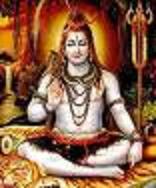
                                                                          Lord Shiva

                                                          Mahashivaratri Festival

Mahashivaratri Festival or the ‘The Night of Shiva’ is celebrated with devotion and religious fervor in honor of Lord Shiva, one of the deities of Hindu Trinity. Shivaratri falls on the moonless 14th night of the waning moon in the Hindu month of Phalguna, which corresponds to the month of February – March in English Calendar. Celebrating the festival of Shivaratri devotees observe day and night fast and perform ritual worship of Shiva Lingam to appease Lord Shiva.

Legends of Mahashivaratri

There are various interesting legends related to the festival of Maha Shivaratri. According to one of the most popular legends, Shivaratri marks the wedding day of Lord Shiva and Parvati. Some believe that it was on the auspicious night of Shivaratri that Lord Shiva performed the ‘Tandava’, the dance of the primal creation, preservation and destruction. Another popular Shivaratri legend stated in Linga Purana states that it was on Shivaratri that Lord Shiva manifested himself in the form of a Linga. Hence the day is considered to be extremely auspicious by Shiva devotees and they celebrate it as Mahashivaratri – the grand night of Shiva.

Traditions and Customs of Shivaratri

Various traditions and customs related to Shivaratri Festival are dutifully followed by the worshippers of Lord Shiva. Devotees observe strict fast in honor of Shiva, though many go on a diet of fruits and milk some do not consume even a drop of water. Devotees strongly believe that sincere worship of Lord Shiva on the auspicious day of Shivaratri absolves a person of sins and liberates him from the cycle of birth and death. Shivaratri is considered especially auspicious for women. While married women pray for the well being of their husbands, unmarried women pray for a husband like Lord Shiva, who is regarded as the ideal husband.

To mark the Shivaratri festival, devotees wake up early and take a ritual bath, preferably in the river. After wearing fresh new clothes devotees visit the nearest Shiva temple and the Shiva lingam is bathed with the five sacred offerings of a cow, called the ‘Panchagavya’ – milk, sour milk, urine, butter and dung. Thereafter the five foods of immortality, namely, milk, ghee, curd, honey and sugar are placed before the Shiva lingam. Dhatura and Jati, though poisonous fruits, are believed to be sacred to Shiva and thus offered at his temple.

 On Shivaratri, worship of Lord Shiva continues all through the day and night. Every three hours priests perform ritual Pooja of Shiva lingam by bathing it with milk, yoghurt, honey, ghee, sugar and water amidst the chanting of “Om Namah Shivaya’ and ringing of temple bells. Nightlong vigil or ‘Jaagaran’ is also observed in Shiva temples where large number of devotees spends the night singing hymns and devotional songs in praise of Lord Shiva. It is only on the following morning that devotee break their fast by partaking Prasad offered to the deity.

This year in 2011, Mahashivaratri is celebrated on Wednesday, 02 March 2011