| Sl No. | Avasthas / Samayas | Interpretation |
| 1 | Snana | Courage, good family, Progeny, Honour, Victory |
| 2 | Vastradharana | Kingship, Acquisition of gems, wealth, Authority |
| 3 | Tilaka / Gandha dharana | Safety, popularity, honour |
| 4 | Japa / Devadarshan | Victory over enemy, gain of land & Vehicle |
| 5 | Shiva Pooja / Prathana Samaya | Gain from land, unnecessary expenditure, Govt penalty |
| 6 | Homa /Aradhana | Grief, unsocial association |
| 7 | Vishnu Pooja / Jaya | Excellence in education |
| 8 | Dwirarchane / Vipraradhane | Acquisition of Kingdom, land, wealth & prosperity |
| 9 | Namaskara | Auspicious time, good vehicle |
| 10 | Giri Pradhakshina | Poverty, quarrel, Govt penalty |
| 11 | Vaishvadeva | Bad omen, authority, Ascetic life style |
| 12 | Athithi Pooja | Enjoyment, education, gain of treasure |
| 13 | Bhojana | Enjoyment, loss of senses |
| 14 | Vidya Prasanga | Excellence, Brahmin Pooja, quarrel, listening to scriptures |
| 15 | Kopa / Ahankara | Worry / depression, enmity |
| 16 | Tamboola | Happiness from woman, secret employment, windfall |
| 17 | Rajavilasa | Victory, experience near God feeling |
| 18 | Kireeta dharana | Happiness, higher authority, excellence in education |
| 19 | Jalapana | Happiness, sweet talk |
| 20 | Alasya / Thamasa | Fear, carelessness, indolence |
| 21 | Shayana / Nidra | Lack of happiness, excessive anger |
| 22 | Madypana | Bliss, happiness |
| 23 | Gandhalepana | Kingdom, acquisition of friends |
| 24 | Dhanarjane /Stree Sallapa | Enjoyment, honour, wealth |
| 25 | Keerti | Enjoyment, gain of wife / children, set backs in tasks |
| 26 | Gada Nedre | Loss of happiness, Govt penalty |
| 27 | Ratna Parikshe | Wealth, association with low grade women, deceit |
Graha Samaya
26 AprManvantara
4 MarManvantara or Manuvantara, or age of a Manu , the Hindu progenitor of mankind, is anastronomical period of time measurement. Manvantara is a Sanskrit sandhi, a combination of words manu and antara, manu-antara or manvantara, literally meaning the duration of a Manu, or his life span.
Each Manvantara is created and ruled by a specific Manu, who in turn is created by Brahma, the Creator himself. Manu creates the world, and all its species during that period of time, each Manvantara lasts the lifetime of a Manu, upon whose death, Brahma creates another Manu to continue the cycle of Creation or Shristi, Vishnu on his part takes a new avtar, and also a new Indra and Saptarishis are appointed.
Eventually it takes 14 Manus and their respective Manvantaras to create a Kalpa, Aeon, or a ‘Day of Brahma’, according to the Hindu Time Cycles and also the Vedic timeline. Thereafter, at the end of each Kalpa, there is a period of dissolution or Pralaya wherein the world is destroyed and it is lies in a state of rest, during a period called the, ‘Night of Brahma’.
After that the creator, Brahma starts his cycle of creation all over again, in an endless cycle of creation followed by Destruction for which Shiva, Hindu God of destruction, and also renewal, is invoked towards the end of each such cycle.
Duration of a Manvantara
The actual duration of a Manavantara, according to the Vishnu Purana is seventy one times, the number of years contained in the four Yugas, with some additional years, adding up to 852,000 divine years, or 306,720,000 human years (Vishnu Purana). Here the division of time which they measure, Seven Rishis, certain (secondary) divinities, Indra, Manu, and the kings, his sons, are created and perish at one period and the interval is called a Manvantara. It is equal to seventy-one times the number of years contained in the four Yugas, with some additional years: this is the duration of the Manu, the (attendant) divinities, and the rest, which is equal to 852.000 divine years, or to 306.720.000 years of mortals, independent of the additional period. Fourteen times this period constitutes a Bráhma day that is, a day of Brahmá; the term (Bráhma) being the derivative form. The Brahma’s life span is 100 Brahma varshas. The following table will illustrate clearly the link to our years and Brahma years.
Sub-divisions
1 human year – 1 Ahoratra for God (1 day and 1 night)
360 Ahoratras of Gods – 1 Deva Vatsara
12,000 Deva Vatsaras – 1 Chaturyuga (36, 00,000 years of human beings)
(4800 Divya Vatsaras of Kritayuga, 3600 Divya Vatsaras of Treta Yuga, 2400 Divya Vatsaras of Dvapara Yuga, & 1200 Divya Vatsaras of Kali Yuga)
71 Chaturyugas – 1 Manvantara (1 life span of Manu)
14 Manvantaras – 1 Kalpa (1 day of Brahma)
2 Kalpas – 1 day and night of Brahma (Ahoratra)
360 days of Brahma – 1 Brahma Varsha
100 Brahma Varsha – 1 life span of Brahma.
Manus of the Śveta Vārāha Kalpa
First Manvantara – the interval of Swayambhu Manu
Saptarishis (सप्तर्षि): Marichi, Atri, Angiras, Pulaha, Kratu, Pulastya, and Vashishtha.
Beginning of Creation
Dhruva Episode
Descent of the Lord as Half-man-half-lion to bless Prahlada
Second Manvantara – the interval of Swarochisha Manu
Urja, Stambha, Prańa, Dattoli, Rishabha, Nischara, and Arvarívat.
The Episode of King Suratha
Third Manvantara – the interval of Auttami Manu
Sons of Vashishtha: Kaukundihi, Kurundi, Dalaya, Śankha, Praváhita, Mita, and Sammita.
Fourth Manvantara – the interval of Támasa Manu
Jyotirdhama, Prithu, Kavya, Chaitra, Agni, Vanaka, and Pivara.
The Episode of Gajendra, the elephant-devotee
Fifth Manvantara – the interval of Raivata Manu
Hirannyaroma, Vedasrí, Urddhabahu, Vedabahu, Sudhaman, Parjanya, and Mahámuni.
Sixth Manvantara – the interval of Chakshusha Manu
Sumedhas, Virajas, Havishmat, Uttama, Madhu, Abhináman, and Sahishnnu.
The churning of the Ocean of milk
Seventh Manvantara (the present) – the interval of Vaivasvata Manu
Kashyapa, Atri, Vashishtha, Vishvamitra, Gautama, Jamadagni, Bharadvaja.
We are in the 7th Manvantara .Each Manvantara is divided into 71 Maha-Yugas.
We are presently in the kaliyuga of the 28th maha-yuga of the 7th manvantara of Brahma’s day
Each Maha-yuga is divided into 4 Yugas, namely, Sata Yuga or Kritha Yuga (4x*), Treta Yuga (3x*) (Descent of Lord Rama), Dwapara Yuga (2x*) (Descent of Lord Krishna) and Kali Yuga (*)
Note: *=4, 32,000Years
Eighth Manvantara (Future) – Saavarni Manu
Díptimat, Gálava, Ráma, Kripa, Drauńi, Vyása, and Rishyasringa.
The next Manu (i.e., the eighth) will be Saavarni. This promise was made by Mother Goddess to one King Suratha during the second Manvantara. To him (and another) the triple story of Mother Goddess is narrated in the Devi-bhagavatam (also Chandi or Durga-saptasati ). The story begins from a mythological event that happened after the end of the last Kalpa (day of Brahma) and ends up by forecasting the feats of Mother Goddess that are yet to happen in this Kalpa. One such is the prediction that Suratha will be born as Manu Saavarni.
Ninth Manvantara – Daksa Savarni Manu
Savana, Dyutimat, Bhavya, Vasu, Medhatithi, Jyotishmán, and Satya.
Tenth Manvantara – Brahma Savarni Manu
Havishmán, Sukriti, Satya, Apámmúrtti, Nábhága, Apratimaujas, and Satyaket.
Eleventh Manvantara – Dharma Savarni Manu
Niśchara, Agnitejas, Vapushmán, Vishńu, Áruni, Havishmán, and Anagha.
Twelfth Manvantara – Rudra Savarni Manu
Tapaswí, Sutapas, Tapomúrtti, Taporati, Tapodhriti, Tapodyuti, and Tapodhan.
Thirteenth Manvantara – Raucya or Deva Savarni Manu
Nirmoha, Tatwadersín, Nishprakampa, Nirutsuka, Dhritimat, Avyaya, and Sutapas.
Fourteenth Manvantara – Bhauta or Indra Savarni Manu
Agnibáhu, Śuchi, Śukra, Magadhá, Gridhra, Yukta, and Ajita.
Mahashivaratri
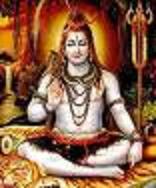
21 FebLord Shiva
Mahashivaratri Festival
Mahashivaratri Festival or the ‘The Night of Shiva’ is celebrated with devotion and religious fervor in honor of Lord Shiva, one of the deities of Hindu Trinity. Shivaratri falls on the moonless 14th night of the waning moon in the Hindu month of Phalguna, which corresponds to the month of February – March in English Calendar. Celebrating the festival of Shivaratri devotees observe day and night fast and perform ritual worship of Shiva Lingam to appease Lord Shiva.
Legends of Mahashivaratri
There are various interesting legends related to the festival of Maha Shivaratri. According to one of the most popular legends, Shivaratri marks the wedding day of Lord Shiva and Parvati. Some believe that it was on the auspicious night of Shivaratri that Lord Shiva performed the ‘Tandava’, the dance of the primal creation, preservation and destruction. Another popular Shivaratri legend stated in Linga Purana states that it was on Shivaratri that Lord Shiva manifested himself in the form of a Linga. Hence the day is considered to be extremely auspicious by Shiva devotees and they celebrate it as Mahashivaratri – the grand night of Shiva.
Traditions and Customs of Shivaratri
Various traditions and customs related to Shivaratri Festival are dutifully followed by the worshippers of Lord Shiva. Devotees observe strict fast in honor of Shiva, though many go on a diet of fruits and milk some do not consume even a drop of water. Devotees strongly believe that sincere worship of Lord Shiva on the auspicious day of Shivaratri absolves a person of sins and liberates him from the cycle of birth and death. Shivaratri is considered especially auspicious for women. While married women pray for the well being of their husbands, unmarried women pray for a husband like Lord Shiva, who is regarded as the ideal husband.
To mark the Shivaratri festival, devotees wake up early and take a ritual bath, preferably in the river. After wearing fresh new clothes devotees visit the nearest Shiva temple and the Shiva lingam is bathed with the five sacred offerings of a cow, called the ‘Panchagavya’ – milk, sour milk, urine, butter and dung. Thereafter the five foods of immortality, namely, milk, ghee, curd, honey and sugar are placed before the Shiva lingam. Dhatura and Jati, though poisonous fruits, are believed to be sacred to Shiva and thus offered at his temple.
On Shivaratri, worship of Lord Shiva continues all through the day and night. Every three hours priests perform ritual Pooja of Shiva lingam by bathing it with milk, yoghurt, honey, ghee, sugar and water amidst the chanting of “Om Namah Shivaya’ and ringing of temple bells. Nightlong vigil or ‘Jaagaran’ is also observed in Shiva temples where large number of devotees spends the night singing hymns and devotional songs in praise of Lord Shiva. It is only on the following morning that devotee break their fast by partaking Prasad offered to the deity.
This year in 2011, Mahashivaratri is celebrated on Wednesday, 02 March 2011
Pradosha
17 FebPradhosha
Pradhosha Pooja is one of the most important poojas performed to the Lord Shiva. In Shukla Paksha and Krishna Paksha the evening of the Trayodashi (thirteenth moon day) between 4.30 p.m. to 6.00 p.m. is called Pradhosha. Pradhosha time is especially meant for praying to Lord Shiva. Praying during that time will free us from our sins and gives us Moksha finally (hence the name Pradhosha). During Pradhosha time a special type of circumambulating called Soma Sutrapradakshinam is done.
Pradhosha Purana:
When Devas and Asuras were trying to get Amrutha (nectar) from the Ksheerabthi (Ocean Milk) using the serpent ‘Vasuki’ and the hill ‘Mandhara’, the terrible poison ‘Halahala’ came up. Every one got frightened and pleaded to Lord Shiva to rescue them. Lord Shiva consumed the poison and ordered Devas and Asuras to continue to churn the ocean. They resumed their effort and got ‘Amrutha’ on Dwadhashi (twelfth moon day). Without praying and thanking the God, Devas started dancing and celebrating their victory.
On Trayodashi (thirteenth moon day) they realized their sin of not praying to the God and pleaded for his forgiveness. Lord Shiva forgave them and danced between the horns of the Nandi (holy bull). That time is called Pradhosha. Whoever prays to Lord Shiva during that time, Lord Shiva fulfills their wishes and gives them’ Mukthi’
When Pradhosha falls on a Saturday then, it is called Mahapradosha or Shani Pradhosha
Jaya Ekadashi
16 FebJaya Ekadashi – 14 Feb 2011
| Jaya Ekadasi is observed on Magha Shukla Ekadashi day, the eleventh day during Shukla Paksha in Magha month. Jaya Ekadasi 2011 date is 14 February. While Magha month is the auspicious month for Shiva Pooja and this Ekadasi is auspicious for Vishnu Pooja.On this day, Lord Vishnu and Shiva both are worshipped. Observing Jaya Ekadashi Vrata gives the devotees the opportunity to get rid of the sins and to get salvation. The legend or story or Jaya Ekadashi Vratakatha is mentioned in the Padma Purana. It is explained as a conversation between Lord Krishna and Yudhistira. Jaya Ekadasi is also known as Bhishma Ekadashi or Bhauma Ekadasi in South India. |
( Courtesy – Mr MS Hebbar)